Esta semana se ha dado a conocer a los próximos del Premio Ig Nobel de este año. Los Ig Nobel o "Antinobel", a diferencia de los Razzie o "Antioscar" en el cine, donde se premia a la peor película del año; premian a las investigaciones científicas y sociales más absurdas y con una menor aplicación en un futuro. En total, se premian diez categorías, a la cual más absurda, así que veamos qué y quiénes han sido premiados, y echémonos unas risas.
- Reproducción: al estudio de la vida sexual de las ratas al llevar pantalones vaqueros. Lógicamente esta se reduce.
- Biología: por la adaptación de dos biólogos ingleses a la vida de los tejones, nutrias, ciervos o pájaros, viviendo en plena naturaleza y desarrollando prótesis para imitarlos.
- Economía: por el estudio de cómo percibir cualidades humanas, relacionadas con el márketing, en las rocas. Se llegó a decir que una roca tenía un aspecto joven y femenino.
- Física: al descubrimiento de que los caballos blancos sufren menos picaduras de tábanos que cualquier otro caballo de otro color, debido a la polaridad de la luz.
- Química: a la empresa Volkswagen, por solucionar el problema del error cometido a propósito por el cual se medían menos emisiones de gases contaminantes de las que realmente había. Viva la ironía.
- Medicina: por el descubrimiento de que, si te pica el lado izquierdo del cuerpo, puedes verte en un espejo y rascarte el lado derecho. Nadie lo había pensado hasta ahora, NADIE. Hemos llegado a la Luna, pero nunca hemos hecho esto.
- Psicología: al estudio de la frecuencia con la que mienten las personas. Los adolescentes son los que más mienten, mientras que los adultos mienten unas dos veces al día, de media, teniendo en cuenta que los propios sujetos con los que se realizó el experimento también han podido estar mintiendo en el transcurso del experimento.
- Paz: al estudio de cómo las palabras vacías, pero que están de moda, pueden llegar a influenciar a toda la sociedad, especialmente en las personas menos inteligentes.
- Literatura: a un autor sueco, por escribir sobre el placer de recoger moscas muertas.
- Percepción: (sí, suena raro, pero esta categoría existe) por un experimento que demuestra que los objetos se ven desde otra perspectiva si se ven entre las piernas. ¿En serio? Totalmente en serio.
¿Cuál creéis que es el más absurdo o el más gracioso? ¿Hay algún descubrimiento útil entre las diez categorías premiadas? Dejad vuestra opinión en la sección de Comentarios.
This week, we have been announced the winners of the Ig Nobel Prize of this year. Ig Nobel Prizes, or "Antinobel", unlike Razzie Awards or "Antioscars" in the cinema, where the worst film is awarded; here the most nonsensical and useless researches in the scientific and social world are awarded. Ten categories are awarded, all of them very absurd, so let's see who and what has been awarded, and let's have some fun.
- Reproduction: for the study of sexual life of rats when wearing jeans. Obviously, it is decreased.
- Biology: for the adaptation of two English biologists to the life of badgers, otters, deers or birds, by living in the countryside and making prosthesis to imitate them.
- Economy: for the study of the techniques to detect human qualities, related to marketing, in rocks. It was even said that a rock had a young and female aspect.
- Physics: to the discovery of how white horses suffer from less gadfly stings that any other horse of other color, due to the polarity of light.
- Chemistry: to the Volkswagen company, for solving the problem of the intentional error in the operating system of their cars which measured lower concentrations of dangerous gases that there were in fact. Ironic.
- Medicine: for discovering that, if you need to scratch your left half of your body, you can see yourself in a mirror and start scratching your right half. Nobody had thought this until now, NOBODY. We have arrived to the Moon, but we have never thought about this.
- Psychology: for studying the frequency with which people tend to lie. Teenagers are the ones who lie most often, while adults tend to lie twice a day, on average, taking into account that the subjects asked in the experiment could have also been lying during the experiment.
- Peace: for the study of how empty, but fancy words can influence the whole society, specially the least intelligent people.
- Literature: to a Swedish author, for writing about the pleasure of collecting dead flies
- Perception: (yes, it sounds very strange, but this category exists) for a experiment that proves that objects seen from between the legs have other perspetive. Seriously? Seriously.
Which is the weirdest or funniest discovery? Do you think there is any useful discovery among the ten mentioned? Leave your opinions in the Comments Section.
Investigadores chinos y canadienses, de manera independiente, han conseguido teleportar fotones en las redes de fibra óptica en las ciudades de Hefei (China) y Calgary (Canadá), demostrando así que no es una idea descabellada la teleportación de partículas y la información que lleven consigo para así obtener formas más seguras y rápidas de telecomunicación.
La teleportación cuántica es distinto a la teletransportación, donde un objeto pasaría de estar en un lugar a inmediatamente localizarse en otro lugar totalmente distinto, algo que todavía no se ha conseguido, ni se cree que se vaya a conseguir en un futuro. La teleportación cuántica consiste en la transferencia del estado cuántico de una partícula a una localización bastante alejada, por lo que, en todo caso, no se teletransportaría materia, pero sí información, siendo esta una de las bases de la computación cuántica. Hasta ahora, todos los casos de teleportación se han dado en el orden de magnitud de decenas de kilómetros, por lo que podría ser un remedio útil para mejorar las telecomunicaciones en el ámbito metropolitano. Para teleportar información mucho más lejos se necesita una tecnología de la que, por ahora, carecemos, por lo que tardará un tiempo en hacerse realidad.
Para ampliar la distancia de teleportación, el equipo chino, de la Universidad de Ciencia y Tecnología de China, utilizó fotones con la longitud de onda de las telecomunicaciones actuales en la redes de fibra óptica para así minimizar la pérdida de información, mientras que el equipo canadiense, de la Universidad de Calgary, utilizó fotones a una longitud de onda de 795 nm, para que la teleportación fuese más rápida, unos 17 fotones por minuto, pero obteniendo un mayor error.
Estos experimentos servirán como introducción a la teleportación cuántica no solo en redes metropolitanas, sino en otras tecnologías, como los ordenadores cuánticos, lo que puede dar lugar a un antes y un después en las formas de transmisión de información. Por ahora, el récord de distancia en la teleportación de información se sitúa más allá de los 100 km.
Chinese and Canadian researchers, independently, have managed to teleport photons in the optic fiber networks in the cities of Hefei (China) and Calgary (Canada), showing that is not a bad idea to teleport particles and the information they bring in order to obtain safer and faster ways of telecommunication.
Quantum teleportation is totally different to teletransportation, where an object changes its location instantaneously in time, something which has not been managed to be done and which is unlikely that ever happens. Quantum teleportation transfers the quantum state of a particle to a quite far away location, so it would not be a teletransportation of matter, but of information, being a basis of quantum computation. Until now, all the cases of quantum teleportation have happened in the order of magnitude of tenths of kilometres, so it could be a useful way to improve metropolitan communications. To teleport information much further we need a much more advanced technology than the one we have now, so we will have to wait some years until it comes true.
In order to increase the teleportation distance, the Chinese team, from the Science and Technology University of China, used photons with the typical wavelength of current telecommunications in the optic fiber networks in order to minimize the lose of information. Meanwhile, the Canadian team, from Calgary University, used photons at a wavelength of 795 nm, in order that teleportation was faster, at a rate about 17 photons per minute, but obtaining a higher error.
These experiments will be used as introduction to quantum teleportation not only in metroploitan networks, but also in other technologies, as in quantum computers, what can create a before and later in the ways of transmission of information. By now, the record of the longest distance covered by quantum teleportation is over 100 km.
La Navegación Fotónica se basa en el uso de velas fotónicas como medio de impulso de una nave espacial. Estas velas fotónicas funcionan de tal modo que son impulsadas por láseres desde la Tierra, lo que implica que no llevan motores, aligerando así su estructura para alcanzar mayores velocidades. Todo el peso de la nave se concentraría en las propias velas. Al carecer de motor, estas naves pueden tener un tamaño bastante reducido, como el de una servilleta.
El funcionamiento de estas naves no es tan complejo. Las velas que impulsan a la nave están formadas por material reflectante que recibe la luz de los láseres de la Tierra, aunque también se puede impulsar por medio de otras radiaciones, como las microondas o las ondas generadas por el propio Sol. Estas radiaciones impulsan la nave, así de simple. En un principio, una nave impulsada por velas solares tarda bastante en alcanzar altas velocidades, con una aceleración actual de 1 mm/s2, o sea, su velocidad aumenta un 1mm/s cada segundo, siendo a primera vista una opción totalmente descartada a favor de la tecnología actual. Sin embargo, como el empuje que reciben es constante y apenas tienen masa, al carecer de motor propio y combustible, pasado un tiempo pueden alcanzar velocidades bastante altas, estimándose que las naves impulsadas por velas fotónicas más avanzadas que se han fabricado, pasado un tiempo, podrían alcanzar velocidades de 1000 km/s, llegando en cuestión de días a Marte. Actualmente, este tipo de navegación no tiene nada que hacer con la navegación convencional, pero hay gente que puede decantar la balanza a favor de la navegación fotónica.
Ciertos magnates y científicos de las más altas élites, entre ellos Stephen Hawking, han decidido unir fuerzas y crear el proyecto Starshot, cuyo principal objetivo es enviar una nave propulsada por velas fotónicas al sistema estelar formado por Alpha centauri A, Alpha centauri B y Proxima centauri. Teniendo en cuenta el constante avance de la tecnología actual, estos investigadores estiman que en unos 20 años se podrían diseñar naves capaces de alcanzar hasta una quinta parte de la velocidad de la luz (60000 km/s), con lo que solo tardarían unos 20 años en llegar a las estrellas más cercanas a nosotros, tras el Sol. El reciente descubrimiento del planeta potencialmente habitable alrededor de Proxima centauri, Proxima B podría desviar el objetivo del proyecto a mandar una flota de miles de naves impulsadas por velas fotónicas, del tamaño de la palma de nuestra mano, con distintos sensores y cámaras hacia el planeta.
Teniendo en cuenta que se tardaría unos 20 años en diseñar unas naves que alcanzasen los 60000 km/s, otros 20 años en que estas naves llegasen a Proxima centauri y otros cuatro años en los que la información suministrada por las naves llegara a la Tierra, dado que Proxima B se encuentra a algo más de 4 años luz de nosotros, en unos 60 años, teniendo en cuenta retrasos, podríamos realizar el primer viaje interestelar.
Photonic navigation is based on the use of photonic sails as a mean of propulsion for a spaceship. these photonic sails are propelled by lasers sent from the Earth, although they could also be propelled by microwaves or the radiation produced by the Sun. As they are not propelled by themselves, they do not need to have an engine, so they save all the weight of the engines an the fuel. All the weight of the spaceship would be concentrated on the sails and the size of the spaceship could be as small as a napkin.
The functioning of this spaceships is not so complex. The sails propelling the spaceship are made up of reflecting material which receives the laser rays from the Earth. Basically, the lasers propel the spaceship. Firstly, a spaceship propelled by solar sails can spend a long time in getting high speeds, with an acceleration of 1 mm/s2, this is, an increase in the speed of 1 mm/s every second, being at first sight a totally incompatible technology with the current technologies. Nevertheless, as it is always propelled by the laser rays and its weight is very reduced, it can get very high speeds after some time. The highest speed that a current probe propelled by photonic sails can get after some time has passed is of 1000 km/s, being able to arrive in just some days to Mars. Nowadays this type of navigation is not very advanced in comparison to the conventional navigational, but there are people that can help the photonic navigation be faster.
Some millionaires and scientists on the top of social status, Stephen Hawking among them are designing a project called Starshot Project, whose main objective is to launch a spaceship propelled by photonic sails to the star system made up of Alpha centauri A, Alpha centauri B and Proxima centauri. Taking into account the advance of technology nowadays, experts state that in 20 years, scientists could develop spaceships propelled by photonic sails that could reach a fifth part of the speed of light (about 60000 km/s). With this speed, the spaceships would only spend other 20 years in travelling to the closest stars to us, after the Sun. The recent discovery of a potentially livable exoplanet around Proxima centauri, Proxima b, can deviate the aim of the mission and send a group of spaceships of the size of our hand, with sensors and cameras, to the exoplanet.
If we spend 20 years in designing the spaceships, other 20 years in sending them to Proxima centauri and other 4 years until the information they send arrives to us, as Proxima B is a little bit more than 4 light years away, in 60 years, taking into account delays, we could complete the first interstelar voyage.
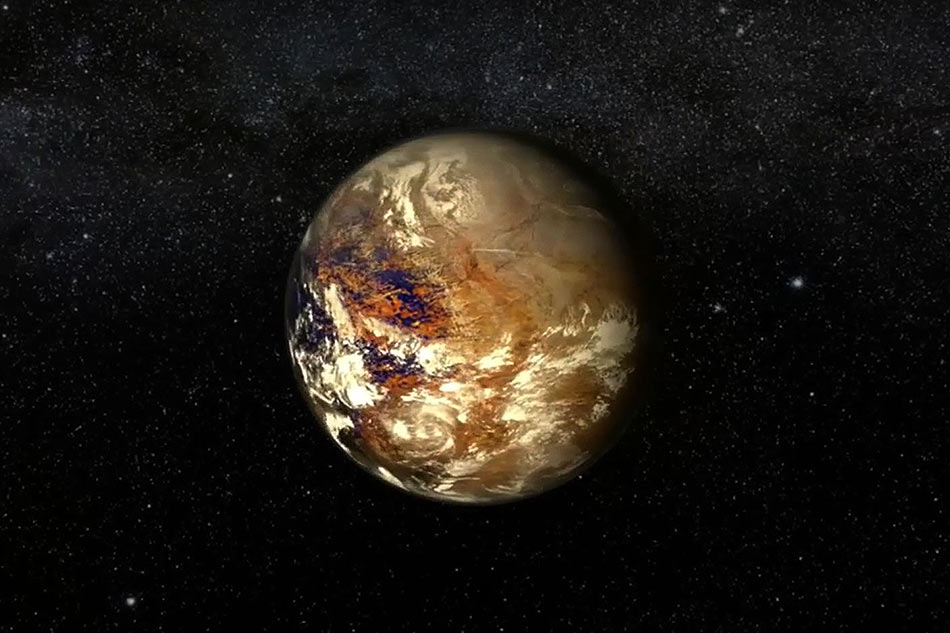
Este es el exoplaneta recientemente descubierto, nada más que hace unas dos semanas, por el Observatorio Europeo Austral en Chile. La gran expectación que ha generado no es para nada exagerada, dado que es un planeta con condiciones muy similares a las de la Tierra, y que tan solo está a algo más de 4 años luz de nosotros, lo cual en términos cosmológicos, es muy pero que muy poco.
Proxima b tiene el récord (con bastante diferencia) de ser el exoplaneta potencialmente habitable más cercano a la Tierra, a 4,224 años luz. Está tan cerca que incluso en un futuro lejano, contando con un avance imparable de la tecnología humana, se podría enviar una sonda que tardase menos de 50 años en llegar allí. ¿Pero cuáles son los datos que realmente hacen que Proxima b sea tan parecida a la Tierra?
- Proxima b cuenta con la condición indispensable para que este pudiera albergar vida similar a la terrestre: se encuentra en la zona habitable de su sistema planetario. No se encuentra ni muy cerca de su estrella, donde las temperaturas alcanzarían varios cientos de grados en su superficie y sería un infierno terrenal; ni muy lejos, donde las temperaturas se desplomarían incluso por debajo de los -200ºC, a muy pocos Kelvin. Simplemente se encuentra a la distancia justa de su estrella madre, Proxima Centauri, una enana roja, siendo así la segunda estrella más cercana a la Tierra tras el Sol. Se estima que se encuentra a unos 8 millones de km de ella, unas 0,05 UA.
- A pesar de que su temperatura media es relativamente baja, unos -40ºC, este planeta se encuentra anclado por marea a Proxima centauri, es decir, que siempre le muestra la misma cara, lo mismo que sucede con la Luna y la Tierra. Por lo tanto, en la cara en la que continuamente recibe radiaciones de su estrella la temperatura es bastante alta, pero en la cara en la que nunca recibe luz está a temperaturas muy bajas; de modo que en regiones que estén entre medias de las dos caras la temperatura sería más apacible, e incluso sería posible la presencia de agua líquida en la superficie, con temperaturas superiores a los 0ºC, siempre y cuando la presión de su atmósfera sea parecida a la presión atmosférica terrestre.
- Su tamaño es ligeramente superior al de la Tierra, en torno a un 10%, mientras que también es ligeramente más masivo, alrededor de un 27% más, con lo que su densidad es similar a la de la Tierra, lo que lleva a pensar que los materiales que conforman Proxima b también podrían ser parecidos. Su gravedad también podría ser ligeramente parecida.
- Al estar anclado por marea a su estrella madre, Proxima b tarda lo mismo en dar una vuelta alrededor de su estrella que en rotar sobre sí mismo, con lo que un día y un año duran allí lo mismo: algo más de 11 días terrestres.
- Su estrella madre, Proxima centauri, es una enana roja, algo mayor que el Sol, unos 4850 millones de años de edad (la edad del Sol es de unos 4600 millones de años), pero mucho más fría y pequeña que este, con una temperatura en superficie de más de 3000ºC, un radio del 14% del radio solar y una masa del 12% de la solar. Tiene también una esperanza de vida mayor que la del Sol. Como ya hemos dicho antes, es la segunda estrella más cercana a la Tierra tras el Sol, siendo descubierta en 1915 por Robert Innes. Hace unos años se descubrió que forma parte de un sistema de estrellas conocido como Alfa centauri, formado por Alfa centauri a, Alfa centauri b y Proxima centauri. Al ser una estrella más fría y pequeña, la zona de habitabilidad de su sistema planetario se localiza mucho más cerca que la del Sol.
- Otro dato que también ha causado bastante interés en el planeta, y que ya no es científico, es la propuesta de Stephen Hawking de enviar una misión allí, y que según sus cálculos, solo tardaría unas décadas en llegar. Hawking afirma que en unos 20 años se podría inventar una tecnología que aceleraría en gran medida los viajes espaciales: sondas del tamaño de una pelota de tenis propulsadas por láser. Estas sondas solo tardarían unos 20 años en llegar a Proxima b, alcanzando un 20% de la velocidad de la luz.
- El principal dato desalentador sobre la exploración del exoplaneta es la escasa tecnología de la que disponemos para llegar allí hoy en día. Por poner un ejemplo, la sonda que más se ha alejado del planeta Tierra, la Voyager 1, lanzada en 1977 y que ahora mismo se localiza más allá del Sistema Solar, tardaría más de 40000 años en llegar. Para hacernos una idea, 40000 años es lo que nos separa de tiempo con los hombres que realizaban las pinturas rupestres. Hace 40000 años, los neandertales o los mamuts existían, y no había ningún rastro de grandes civilizaciones. Es poco probable que un vehículo esté operativo durante tanto tiempo.
¿Llegará el hombre alguna vez a Proxima b? Por ahora, se ve que no, ya que ni siquiera hemos sido capaces de llegar a Marte, a pesar de tener los medios disponibles, por lo que realizar una misión imposible desde el punto de vista no solo tecnológico sino también económico es un gran riesgo a sufrir un fracaso, en un 99 seguido de muchos nueves, por ciento. La exploración de Proxima b sea seguramente un problema de las siguientes generaciones, a pesar de los grandes ánimos del señor Hawking. Por ahora, no.
¿Vosotros qué pensáis? Dejad vuestra opinión en los Comentarios.
This is the recently discovered exoplanet, some weeks ago, by the European Southern Observatory in Chile. The great expectation it has brought is not exaggerated by any term, as it is a planet with very similar conditions to the ones of the Earth, and that is only a little bit more than 4 light years away, what, in cosmologic terms, is a really short distance.
Proxima b has the record of being the closest potentially livable exoplanet, 4224 light years away. It is so close that in a far future we could send a spaceship, which, with the unstoppable advance of current technology, only spends a little bit more than 40 years to arrive there. But which are the most important data that make Proxima b so special?
- Proxima b has the essential condition for being a potentially livable planet. It is not very close to its mother star, so the temperatures there do not reach hundreds of degrees, as if it was a real hell and it is not very far away, so the temperatures are not some hundreds of degrees below zero, just few Kelvin. It is just located in the appropiate distance, where it is not too cold nor too hot, being 8 million km away (0.05 AU) from its mother star, Proxima centauri, a red dwarf that is the second closest star to the Earth, after the Sun.
- Although its average temperature is quite cold, about -40ºC, this datum is quite deceiving, because Proxima b is tidally locked to its star, this means that it is always showing the same face to Proxima centauri, so it has a very hot face, the one receiving all the radiation from the star and a very cold face, the one opposing the star. Therefore, in the line of separation of both faces, the temperature is not so low nor high, and it could be possible to obtain there water in liquid state, if the temperature is above 0ºC and the atmospheric pressure is similar to the one of the Earth's atmosphere.
- Its size is quite bigger than the one of the Earth, a 10% more, while it is a 27% more massive, so it has a very similar density to the one of the Earth, what means that the materials it contains could also be similar to the ones in the Earth. Its gravity could also be slightly similar.
- As Proxima b is tidally locked to Proxima centauri, it spends the same time in rotating itself than spinning around the star, as happens with the Earth and the Moon. A year and a day in Proxima b have the same duration. The total period is a little bit longer than 11 days.
- Its mother star, Proxima centauri, is a red dwarf, quite older than the Sun, 4.85 billion years old (the Sun is 4.6 billion years old), but much colder and smaller than the Sun, with a surface temperature of 3000ºC, a radius which is a 14% the one of the Sun and a mass that is a 12% the one of the Sun. It also has a longer life expectancy than the Sun, although it is older. As we have already said, it is the second closest star to the Earth after the Sun, being discovered in 1915 by Robert Innes. Some years ago, it was discovered that it belonged to a system of three stars, together with Alpha centauri a and Alpha centauri b. As it is much colder and smaller than the Sun, its habitability region is much closer to it than the one of the Sun.
- Other datum that has also created many interest, and which is not scientific, has been the proposal of Stephen Hawking of sending a mission there. According to his calculations, the spaceship would only spend 3 decades in getting there. Hawking states that in 20 years' time, a new technology will generate a very important revolution in the world of space travelling: probes of the size of a tennis ball propelled by lasers that could reach a 20% of the speed of light. With this speed, the probes would just arrive in 20 years to Proxima b.
- Tha main discouraging data is that nowadays we do not have the means to get there in a lifetime. For instance, the Voyager 1, the vehicle which has travelled the highest distance from the Earth ever since, being launched in 1977 and being now beyond the limits of the Solar System, would spend 40000 years in arriving to Proxima b. 40000 years is the time that separates us from the men who painted in caves, for having an idea. 40000 years ago, Neanderthals and mammoths still existed. It is very unlikely that a vehicle reamins operative for such a long time.
Will humanity arrive to Proxima b? Right now, it is impossible, as we have not even been able to go to Mars, although we have the means for going to Mars, so it is unthinkable to go to a place if we do not have the means. Designing a mission nowadays to Proxima b would be a technologic and economic failure in a 99 followed by many nines as decimal figures per cent. The exploration of Proxima b will be probably a problem for the next generations of scientists, even if Mr. Hawking has very enthusiastic ideas. For now, no.
What do you think? Leave your opinions in the Comments section.
Os dejo vídeos informativo del exoplaneta Proxima b, en español, y otro en inglés / I leave you videos with more information about Proxima b, in Spanish and in English.
El director de la Agencia Espacial Japonesa, JAXA, Suku Tsuneta, tiene claro que el objetivo de la Astrofísica para los próximos 20 años es encontrar vida más allá de la Tierra. O al menos, si no se encuentra vida, encontrar lugares en el Universo que reúnan todas las condiciones posibles de habitabilidad.
Desde los 90 se han descubierto miles de planetas extrasolares, o exoplanetas, por lo que no es nada descabellado pensar que al menos algunos de esos planetas albergan vida o al menos, reúnen condiciones similares a las terrestres para albergar vida. El próximo objetivo pasa por detectar moléculas claves para el desarrollo de la vida, también llamadas biomarcadores, las cuales podrían ser detectadas con la siguiente generación de telescopios. Entre los distintos biomarcadores podemos encontrar moléculas como el oxígeno, el dióxido de carbono, el agua o el metano.
Otro de los objetivos pasa por salir del Sistema Solar, para lo que con la tecnología actual se necesitarían entre diez y veinte años, pero por lo menos así seríamos capaces de registrar si hay vida más allá de nuestro entorno espacial, y por qué no, enviar vida, lo que se conoce como Proyecto Génesis (ver http://andres96cmc.blogspot.com.es/2016/09/proyecto-genesis-genesis-project.html). Al menos, si esto no fuese factible, podríamos intentar comunicarnos con otras formas de vida inteligente, lo cual genera partidarios y detractores a partes iguales, siendo este el principal objetivo del SETI, el cual ha mejorado sus infraestructuras (ver http://andres96cmc.blogspot.com.es/2016/09/se-mejorara-la-busqueda-de-vida.html).
A pesar de que los próximos objetivos se centran más allá del Sistema Solar, es crucial que se siga estudiando nuestro entorno. De aquí a quince años podríamos volver a la Luna o incluso mandar una misión tripulada a Marte. Nuevas misiones hacia planetas (New Horizons, Juno, el robot Curiosity...), cometas (Philae) o asteroides (OSIRIS-REx, Hayabusa) se están lanzando o han sido lanzadas y nos aportarán información valiosa en el futuro.
The principal of the Japanese Space Agency, JAXA, Suku Tsuneta, states that the aim of Astrophysics for the next twenty years is to find life beyong the Earth. Or at least, to find places in the Universe that have all the possible conditions of habitability.
Since the 1990s, thousands of exoplanets have been discovered, so it is nothing strange to think that at least some of those planets have life, or at least, the sufficient conditions to have life. Key molecules for life, or biomarkers, could be detected with the next generation of telescopes. Among the different biomarkers that exist, we can find biomolecules as oxygen, carbon dioxide, water or methane.
Other of the main aims is to go beyond the Solar System, but with the current technology we could spend between 10 and 20 years to do it, but at least we would be able to register if there is life out of our Solar System, or what is more, send life beyond the Solar System, what is known as Genesis Project (see http://andres96cmc.blogspot.com.es/2016/09/proyecto-genesis-genesis-project.html). If this project was not carried out, we can communicate with intelligent ways of life, what is at the same time supported and criticized, being this one the main target of SETI, which has improved its facilities (see http://andres96cmc.blogspot.com.es/2016/09/se-mejorara-la-busqueda-de-vida.html).
Although the main targets are focused far away from the Solar System, it is of special importance that our space environment continues being studied. In the next fifteen years, we could retunr to the Moon or send a manned mission to Mars. New missions to planets (New Horizons, Juno, the Curiosity robot...), comets (Philae) or asteroids (OSIRIS-REx, Hayabusa) are being launched or have been launched and are still active, bringing important information in the future.
Una sonda de la NASA, el SDO (Observatorio de Dinámica Solar, llamado así por sus siglas en inglés) fue capaz de observar un eclipse solar doble el pasado jueves 1 de septiembre.
Este eclipse solar doble fue originado cuando la Luna y la Tierra se interpusieron entre el SDO, que sirve como observatorio solar desde el espacio para los astrónomos, y el propio Sol. Se pudo apreciar por un lado la sombra generada por la Tierra, más difusa debido a la absorción de la radiación solar por parte de la atmósfera terrestre, y por otro lado, la sombra generada por la Luna, más precisa y definida.
Como la Luna a su vez se interpuso entre la Tierra y el Sol, también hubo un eclipse solar, esta vez simple, en la Tierra, visible desde el sur de África. En España solamente fue visible una ínfima parte desde las islas Canarias. El eclipse solar fue de tipo anular, debido a que la Luna estaba más alejada de la Tierra de lo normal, por lo que "tapa" menos la superficie solar, lo que hace que seamos capaces de ver las capas más externas del Sol, como la corona, sin recurrir a instrumentos o técnicas especiales. Es más, la corona solar fue una capa descubierta durante un eclipse anular en el siglo XIX.
A probe of NASA, the SDO (Solar Dynamics Observatory) detected a double solar eclipse the past Thursday, September 1st.
This eclipse was originated when both the Moon and the Earth interposed between the Sun and the SDO, which is used as a solar observatory in the space for the astronomers. On one hand, it could be appreciated the shadow created by the Earth, diffuse due to the fact that the atmosphere of the Earth absorbs the solar radiation, and on the other hand, the shadow of the Moon could be appreciated, much more defined.
As at the same time, the Moon interposed between the Earth and the Sun, there was also a solar eclipse, single this time, in the Earth, visible from Southern Africa. In Spain, only a very little piece was observed from the Canary Islands. The solar eclipse was of annular type, as the Moon was further than usual from the Earth, so it "covered" less solar surface, allowing us to see directly, without any supporting special instrument or technique, the outer layers of the Sun, as the corona. What is more, the solar corona was discovered during the observation of a solar eclipse in the 19th century.
Os dejo un vídeo con imágenes del SDO sobre este curioso hecho, el vídeo está en español / I leave you a video with images taken by the SDO about this curious fact, the video is in Spanish
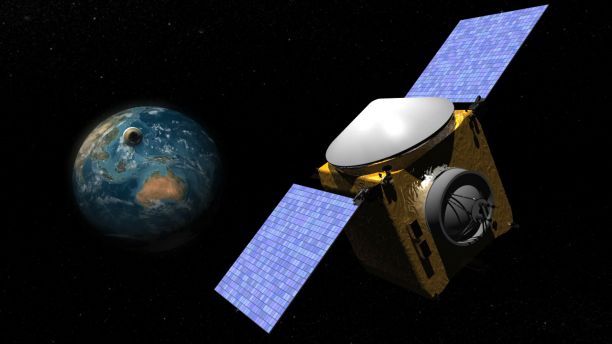
La sonda de la NASA OSIRIS-REx, de la cual ya hemos hablado anteriormente (ver http://andres96cmc.blogspot.com.es/2016/08/nueva-mision-de-la-nasa-hacia-un.html) ha despegado este jueves hacia el asteroide Bennu. El despegue se ha realizado desde la plataforma de lanzamiento de la NASA en Cabo Cañaveral, en el estado de Florida, a las 19:05 hora local, 0:05 GMT, 1:05 hora española. De esta forma, la sonda comienza un viaje de siete años de duración, ida y vuelta.
La misión es de alto interés dado que Bennu es un asteroide similar a los que impactaron contra la Tierra en las primeras etapas de su vida, con lo que puede tener claves de la formación no solo de la Tierra, sino de todo el Sistema Solar. Además, Bennu es un asteroide que podría impactar contra la Tierra en el siglo XXII, por lo que su estudio es algo relevante y necesario.
La sonda recogerá rocas del asteroide, para así poder rastrear el origen de la Tierra y el Sistema Solar, estudiando también su forma, tamaño, masa y órbita. Es la primera vez que una sonda estadounidense se posará sobre un asteroide, tras hacerlo la sonda japonesa Hayabusa en el asteroide Itokawa. La sonda se servirá de un brazo robótico que con la ayuda de una bomba de nitrógeno conseguirá recoger muestras del asteroide de entre 60 gramos y 2 kilos.
Bennu es un asteroide rico en carbono cuya composición apenas ha cambiado en miles de millones de años, por eso los astrónomos están tan interesados en estudiarlo. En una órbita normal, Bennu está a una distancia máxima de la Tierra de unos 344 millones de km, más de dos veces la distancia entre la Tierra y el Sol, y a una distancia mínima de unos 450000 km, algo ligeramente superior a la distancia entre la distancia entre la Tierra y la Luna, con lo que se aproxima a la Tierra una vez cada seis años. Se cree que puede contener moléculas orgánicas relacionadas con la vida terrestre, como aminoácidos. La probabilidad de que impacte contra la Tierra entre los años 2175 y 2199 es de una entre 2700, durante el último cuarto del siglo XXII.
OSIRIS-REx llegará a Bennu en agosto de 2018, tras una asistencia gravitatoria en la Tierra, comenzando entonces su estudio del asteroide. La sonda orbitará el asteroide hasta marzo de 2021, luego se prevé que regrese a la Tierra en septiembre de 2023, dentro de siete años, aterrizando en Utah, EEUU. El estudio de las muestras llevará dos años, hasta el 2025.
The probe of NASA, OSIRIS-REx, about which we have talked previously (see http://andres96cmc.blogspot.com.es/2016/08/nueva-mision-de-la-nasa-hacia-un.html) has been launched this past Thursday to study the asteroid Bennu. The takeoff has been performed in the launch pad in Cape Canaveral, in the state of Florida, 7:05 pm local time, 0:05 am GMT, 1:05 am Spanish time. In this way, the probe starts a round trip of seven years of duration.
The mission is of high interest, since Bennu is a similar asteroid to the ones that crashed with the Earth during the first years of its life, so it can be a key for knowing more details not only ab out the formation of the Earth, but of the whole Solar System. Furthermore, Bennu is an asteroid that could crash into the Earth in the 22nd century, so its study is very relevant.
The probe will collect rocks from the asteroid in order to track the origin of the Earth and the Solar System, studying also its shape, size, mass and orbit. It is the first time that an American probe lands in an asteroid, after the Japanese probe landed in the asteroid Itokawa. The probe will use a robotic arm, which with the help of nitrogen pump will be able to take samples between 60 grams and 2 kilos of mass.
Bennu is an asteroid rich in carbon whose composition has hardly changed in billions of years, that is why the astronomers are so interested in studying it. In a normal orbit, Bennu is at a maximum distance from the Earth of 344 million km, more than twice the distance between the Earth and the Sun, and at a minimum distance of 450000 km, a distance slightly higher than the one between the Earth and the Moon. It gets very close to the Earth once every six years. It is thought that it could contain organic molecules such as aminoacids, key molecules in life. The probability of impact with the Earth is of one out of 2700, between the years 2175 and 2199, during the last quarter of the 22nd century.
OSIRIS-REx will arrive to Bennu in August 2018, after receiving a gravitational assist in the Earth, starting then its study of the asteroid. The probe will orbit Bennu until March 2021, coming back to Earth in September 2023, in 7 years' time, landing in Utah, USA. The study of the samples will last two years more, until 2025.