Vistas de página en total

martes, 24 de enero de 2017

10 hitos de la Física en 2016 / 10 findings in Physics in 2016

2016 ha sido un año prolífero para la Física, facilitando en gran medida nuestro conocimiento de la realidad. Aquí los 10 hallazgos principales de este año pasado:

1) Confirmación de la existencia de las ondas gravitacionales
     
En el mes de febrero, el observatorio estadounidense LIGO confirmó la existencia de las ondas gravitacionales, propuestas hace casi un siglo por Einstein, tras estudiar la fusión de dos agujeros negros a millones de años luz de la Tierra. De nuevo en junio otra detección de este mismo tipo de ondas fue confirmada por el mismo observatorio.

2) Nueva hipótesis sobre "el gato de Schrödinger"

Científicos de la Universidad de Yale propusieron que el gato mencionado por Erwin Schrödinger, el cual puede estar vivo o muerto dentro de una caja, no solo está en una caja. Fuera de este "cuento", lo que estos investigadores proponen es que no solo es imposible determinar la velocidad y posición  exacta de ciertas partículas subatómicas, sino que también son capaces de estar en dos lugares distintos a la vez, gracias a un fenómeno conocido como teleportación, lo cual puede ser la base para la transmisión de información de manera inmediata y sin interferencias entre dos puntos alejados, siendo también un concepto bastante importante en la Computación Cuántica, en la que se basarán los ordenadores del futuro.

3) El reloj más preciso del mundo (hasta la fecha)

Investigadores alemanes proponen un método directo de estudio del decaimiento del Torio-229, el cual daría lugar a un reloj nuclear mucho más preciso que el atómico, con posibles aplicaciones en las Telecomunicaciones o la Computación Cuántica.

4) El gravímetro más sensible (hasta la fecha)

Científicos de la Universidad de Glasgow, Escocia, RU, han ideado un gravímetro (aparato encargado de medir la intensidad del campo gravitatorio terrestre) bastante sensible, pequeño y sensible, con aplicación en la Aviación o la Minería.

5) Metamateriales

Alrededor de todo el mundo, distintos científicos han desarrollado nuevos materiales con sorprendentes propiedades, donde cabe destacar la capacidad del grafeno de comportarse como una lente perfecta, con distintas aplicaciones en la Óptica o la Electrónica.

6) Proxima B

Científicos de la Universidad Queen-Mary de Londres, Inglaterra, RU, han descubierto el planeta potencialmente habitable más cercano a la Tierra, Proxima B, orbitando alrededor de Proxima centauri a tan solo 4 años luz de la Tierra. El viaje a este planeta podría ser posible en un futuro gracias a la tecnología de las velas fotónicas, siendo el primer viaje interestelar de la historia de la humanidad.

7) Iones en los ordenadores cuánticos

Dos equipos de investigadores, de manera independiente, han conseguido el entrelazamiento cuántico entre iones, lo cual es un importante paso para que los ordenadores cuánticos se hagan realidad.

8) Nuevas generaciones de microscopios

Investigadores de la Universidad de Stratchclyde, Escocia, RU, han desarrollado lo que será la base de muchos microscopios en el futuro, la mesolens, una lente capaz de tomar imágenes enteras de muestras microscópicas sin perder detalle alguno. Varios embriones de ratón han sido ya estudiados bajo esta lente.

9) Primera simulación a ordenador de la Física de Partículas

Físicos de la Universidad de Innsbruck, Austria, han conseguido llevar a cabo la primera simulación de un choque entre distintas partículas subatómicas, una tarea bastante ardua para los ordenadores actuales, la cual se puede facilitar con el avance proporcionado por la Computación Cuántica.

10) Motor de un átomo

Científicos de la Universidad de Maguncia, Alemania, han desarrollado un motor basado en el comportamiento de un solo átomo, capaz de transformar la diferencia de temperatura en energía mecánica, como cualquier otro motor, en donde se encuentra un átomo de calcio atrapado en un embudo. Este hallazgo puede ser el que por fin conecte la Física de Partículas con la Termodinámica.


2016 has been a very productive year for Physics, making a lot easier for us the knowledge of our environment. Here are the main 10 discoveries from last year:

1) Confirmation of the existance of gravitational waves

In February, the American observatory LIGO confirmed the existance of gravitational waves, proposed almost a century ago by Einstein, after studying the fusion of two black holes millions of light years away from Earth. In June it was confirmed the detection of new gravitational waves, again.

2) New hypothesis about Schrödinger´s cat

Scientists from Yale University, USA, proposed a new version of the "tale" of Schrödinger´s cat. In the original tale, Erwin Schrödinger proposes there is a box with a cat inside, who can be dead or alive. The solution is that the cat is alive and dead at the same time and we cannot know whether he is precisely dead or alive, which in the real world means that there are subatomic particles whose position and velocity cannot be computed with much precision. Now, these scientists propose that the cat continues being alive and dead at the same time, but the cat is also in two boxes at the same time. This could mean that some particles are able to change instantaneously their position in a process called "teleportation", what can be key for the future of Telecommunications and Quantum Computation.

3) World´s most precise clock (until now)

German reaserchers propose to build a quantum clock based on the decay of Thorium-229, which would give rise to a much more precise clock than the atomic one, with possible applications in Telecommunications or Quantum Computation.

4) World´s most sensitive gravimeter (until now)

Scottish scientists from Glasgow University have built a very sensitive, non-expensive and light gravimeter, a device specialized in measuring the intensity of gravitational fields, with applications in Aviation or Mining.

5) Metamaterials

In different countries, different scientists have developed new materials with new properties, where we can highlight graphene behaving as a perfect lens, with future applications in Optics or Electronics.

6) Proxima B

Astrophysicists from Queen-Mary University in London, England, UK, have discovered the closest potentially-livable planet to Earth, Proxima B, orbiting Proxima Centauri at 4 light years of distance. The voyage to this planet could be performed in some decades with the technology of photonic sails, being the first interstelar voyage in the history of mankind

7) Quantum computers based on ions

Two independent teams of researchers have achieved the quantum crosslinking between ions, what is a very important step in order that quantum computers become true.

8) New generations of microscopes

Scientists from the University of Stratchclyde, Scotland, UK, have developed a very precise lens for microscopes, called mesolens, which is able to take images of whole samples without losing any biological detail. Some mouse embryos have already been studied with this technique.

9) First computer simulation in Particle Physics

Physicists from Innsbruck University, Austria, have been able to perform the first computer simulation on Particle Physics. No simulations have been made until now, because it is quite a difficult work for current computers, what can be made much easier with Quantum Computation.

10) Single atom engine

Researchers from Maguncia University, Germany, have developed an engine which transforms a difference of temperature in mechanical work (as any engine), but which is based in the behavior of just one calcium atom trapped in a funnel. This finding can be the one that finally links Particle Physics with Thermodynamics.

Para más información / For more information: http://www.abc.es/ciencia/abci-diez-hallazgos-fisica-mas-impactantes-2016-201612131143_noticia.html

Sondas microscópicas para tratar enfermedades del estómago / Microscopic probes for treating stomach diseases

Investigadores de la Universidad de California, EEUU, proponen un nuevo método para tratar ciertas dolencias de estómago, sondas microscópicas que liberen el medicamento una vez que estén en la cavidad estomacal.

De acuerdo con la propuesta, la sonda, también denominada "microsubmarino", sería impulsada por micromotores que utilizarían protones como combustible, sin llegar a dejar residuos tóxicos en el cuerpo, estando recubierta por un polímero biocompatible sensible a los cambios de pH. El núcleo de la sonda está formado por magnesio y una pequeña capa de oro, de forma que casi todo el núcleo queda rodeado por un soporte de vidrio, salvo una parte, donde se produce una reacción electroquímica del magnesio con los ácidos estomacales donde se libera hidrógeno en forma de protones que ayudan a impulsar a la nave.

Cabe destacar que el estómago es un medio totalmente ácido, remarcando el ácido clorhídrico (HCl), como compuesto principal de los ácidos gástricos, por lo tanto, los valores de pH son bastante bajos, entre 2 y 3. Por esta razón, muchos medicamentos no pueden ser administrados por vía oral, debido a que son muy sensibles al ácido estomacal, con lo que no llegan a ser absorbidos en el intestino delgado, donde ya pasarían al torrente sanguíneo y empezarían a surtir efecto. Las alternativas a la vía oral son las inyecciones venosas o intramusculares, donde si la administración del medicamento es puntual no hay ningún problema, pero si la administración es crónica puede llegar a ser un verdadero fastidio (imagínese el tener que pincharse varias veces al día todos los días de su vida; en ciertas enfermedades donde se requiere una absorción inmediata del medicamento, como en algunos tipos de diabetes, no hay otra alternativa, pero en muchos otros casos ahora puede haberla).

Actualmente, ya existen medicamentos recubiertos de determinadas sustancias resistentes al pH, pero si estos medicamentos tienen que actuar en el estómago, estamos ante un problema: si diseñamos un medicamento resistente al pH, este no actuará en el estómago, pero si no lo hacemos resistente al pH, seguramente los ácidos lo terminen destruyendo y haciéndolo ineficaz. Hay una alternativa: diseñar fármacos que bloqueen la acción de los ácidos, lo malo de esto es que si el tratamiento es prolongado, la homeóstasis (el equilibrio interno del cuerpo), puede verse severamente afectada, apareciendo numerosos efectos secundarios: diarrea, vómitos, náuseas, dolor de cabeza...

Con las microsondas, el pH se modifica solo de manera temporal, en tan solo un día, con lo que muchos de los efectos secundarios citados anteriormente son evitados. El fármaco rápidamente es liberado en la mucosa gástrica una vez que el pH ha aumentado y antes de que vuelva a reducirse.


Researchers from the University of California, USA, have proposed a new method to treat some of the multiple diseases which happen in the stomach, microscopic probes able to release drugs once they are in the stomach cavity.

According to this proposal, the probe, also called "microsubmarine", would be propelled by micromotors which would use protons as fuel, without leaving toxic wastes in the body., being lined by a biocompatible polymer sensitive to pH changes. The nucleus of the probe is made of magnesium and a thin layer of gold, so almost all the nucleus is covered by glass except for a small part where an electrochemical reaction takes place between the magnesium and the acids, producing hydrogen in the form of protons which helps to propel the probe.

It must be highlighted that the stomach is a totally acid medium, containing a high quantity of hydrochloric acid (HCl) among the gastric acids, with pH values around 2 and 3. For this reason, many drugs cannot be administered orally, as they are very sensitive to gastric acids, so they do not get to be absorbed in the small intestine, where they are supposed to go to the bloodstream and deliver their effects. Some alternatives are venous or intramuscular injections, where if the administration of the drug is punctual, there is no problem, but if the administration is chronic, it can be bothering (imagine to puncture himself or herself several times a day everyday; in some diseases where a fast absorption of the drug is needed, as happens in some types of diabetes, there is no other way, but now in some other cases, this can be skipped).

Nowadays, there are drugs covered by compunds resistant to pH, but if these drugs have to be delivered in the stomach, there is a problem: if we cover them with these substances, they will not be absorbed in the stomach and if we do not cover them, they will probably be destroyed by the acids. The alternative applied now is clear, together with the drug, inhibitors of these acids are also administered. If the treatment is lengthy, homeostasis (body internal equilibrium) can be severely affected, producing many side effects: headache, dizzyness, vomiting, diarrhea...

With the microprobes, the pH is modified temporarily, just a day, so many of the effects previously cited are avoided. The drug is rapidly delivered in the gastric mucous membranes once the pH has increased and before it decreases again.

Para más información / For more information: http://www.abc.es/ciencia/abci-minisubmarinos-navegando-estomago-201701232035_noticia.html


lunes, 23 de enero de 2017

Impresión de piel humana / Human skin printing

Investigadores de la Universidad Carlos III de Madrid (UC3M), junto con científicos del Centro de Investigaciones Energéticas, Medioambientales y Tecnológicas (CIEMAT), del Hospital Gregorio Marañón y de la empresa BioDan, todos en España, han conseguido desarrollar una impresora 3D capaz de generar piel humana, totalmente idéntica a la que tenemos. Se espera que en unos meses dicha impresora salga al mercado, dependiendo del tiempo que tarde en ser aprobada por distintas regulaciones europeas.

Hace ya años, el mismo equipo de investigadores, liderados por el español José Luis Jorcano, consiguió desarrollar un sistema para generar piel humana in vitro a partir de biopsias, en espacio de unas tres semanas. Este procedimiento es totalmente manual, y por lo tanto, bastante difícil y costoso. La revolución de las impresoras 3D puede disminuir el tiempo de producción, aunque tampoco en una gran medida, ya que todavía se necesita que las células de la piel, queratinocitos y fibroblastos, entre otras, se desarrollen hasta alcanzar su estado adulto. 

La bioimpresora construye la piel capa a capa de manera automática, desde la más superficial (epidermis) a la más profunda (dermis). Para ello, se sirve de un compuesto patentado por el propio CIEMAT: la biotinta (bioink), que en vez de contener color o polímeros, como en otras impresoras 3D, contiene células de la piel, proteínas y scaffolds (andamiajes), con los que la piel impresa va obteniendo su estructura natural. Además de las biotintas, la impresora obviamente es controlada por un ordenador e imprime en un módulo conocido como módulo de impresión. Posteriormente, la piel impresa es incubada durante un tiempo a 37ºC, la típica temperatura corporal.

Entre las aplicaciones de la bioimpresora podemos encontrar el transplante de piel para pacientes quemados o con otras afecciones cutáneas, la creación de bancos de piel humana o la realización de distintas pruebas de productos cosméticos sin llegar a testarlos en animales, lo cual está bastante restringido legalmente. La piel utilizada puede ser de origen autólogo, en otras palabras, del propio paciente, en caso de que necesite un transplante de piel y así evitar el rechazo inmunológico, o alogénico, siendo donada por alguien ajeno al tratamiento.

El futuro de las investigaciones se centra en la impresión de tejidos más complejos, como vasos sanguíneos, corazones o estructuras cutáneas más complejas. También se contemplan como objetivos la automatización y el abaratamiento del proceso y una reducción del tiempo de producción.


Researchers from the University Carlos III of Madrid (UC3M), together with scientists from the Centre for Energetic, Environmental and Technological Research (according to the initials in Spanish, CIEMAT), Gregorio Marañón Hospital and the company BioDan, all from Spain, have developed a 3D printer able to generate human skin, totally identical to the one we have. It is thought than ina few months' time the printer is launched to the market after it has been approved by certain European regulations.

Some years ago, the same team, leadered by the Spanish scientist José Luis Jorcano, developed a system to generate human skin in vitro, starting from an initial biopsy, in a three weeks' time. This procedure is totally manual, and therefore, difficult and expensive. The revolution of 3D printers can reduce this time, but not in a significant way, since the cells are neeeded to grow, multiply and become adult cells.

The bioprinter builds the skin layer by layer automatically, from the outermost (epidermis) to the innermost (dermis). It uses a compound patented by CIEMAT: bioink, an ink which instead of containing color or polymers, as other 3D printers, contains cells and proteins from the skin and scoffolds with which the skin gets its natural structure. Appart from bioink, the printer is obviously controlled by a computer and contains a module where the skin is printed. Afterwards, the skin is incubated at 37ºC, the typical body temperature.

Among its applications, we can find the skin transplant for people with severe burnts or other skin disorders, the development of human skin banks or the performance of different tests of cosmetical products, without testing them on animals, what is very restricted. The skin can be autologous, in other words, obtained from the patient in case he or she needs a transplant, avoiding immune rejection, or alogenic, being donated by someone which is not taking part in the treatment.

The future of this research focuses in the princting of more complex structures, such as blood vessels, hearts or more complex skin structures. Other aims are the total automation of the process, the decrease of the costs and the decrease of the production time.

Para más información / For more information: http://www.rtve.es/noticias/20170123/cientificos-espanoles-disenan-bioimpresora-piel-humana/1477720.shtml


El vídeo está en español / The video is in Spanish

sábado, 17 de diciembre de 2016

Se consigue revertir los efectos del envejecimiento / Aging effects have been managed to be reverted

Un equipo de investigadores del Instituto Salk, en EEUU, liderados por el español Juan Carlos Izpisúa, ha conseguido "dar la vuelta" a los efectos del envejecimiento en ratones y en células humanas, basándose en el funcionamiento de tan solo cuatro genes. En la investigación también han participado varios centros españoles.

El principal objetivo de este proyecto no se centra en revertir los aspectos del envejecimiento, sino más bien sus efectos a nivel interno, focalizándose a nivel celular y subcelular, en la búsqueda de los genes relacionados con el envejecimiento. El principal resultado en torno al cual el proyecto se está haciendo famoso es el tratamiento que se está aplicando en ratones con progeria, una enfermedad caracterizada por la aparición de los signos del envejecimiento a edades muy tempranas (en humanos a partir de los dos años de edad), lo que da lugar a una esperanza de vida de no más de 20 años. Al recibir el tratamiento, estos ratones consiguieron alargar su vida hasta un 30% más que aquellos ratones que no han recibido dicho tratamiento. Extrapolando esta cifra al período de vida humano, una persona con una esperanza de vida de 80 años sería capaz de alargar su vida unos 25 años más, aunque expresar estos resultados en humanos no es muy riguroso.

Dicho tratamiento se ha testado en órganos de los ratones como piel, músculos o páncreas, aumentando su capacidad de regeneración en ratones de edad avanzada, e incluso teniendo una capacidad equiparable a la de ratones jóvenes. Los científicos aseguran que estos efectos también se podrían dar en otros órganos del ratón, con lo que se podría mejorar bastante su calidad de vida. El cuerpo humano es mucho más complejo, por lo que estos resultados no podrían extrapolarse a humanos, con lo que se necesitaría experimentar con humanos para obtener resultados fiables.

El preparado utilizado por el equipo de Izpisúa no es una novedad: fue descubierto e ideado por el Nobel de Medicina Shinya Yamanaka, basándose en cuatro genes capaces de "reprogramar" cualquier célula, es decir, hacer que cualquier célula especializada en un determinado tejido (muscular, nervioso, adiposo, epitelial, de la sangre, conectivo, reproductiva...) pueda volver a convertirse en célula madre, siendo capaz de reconvertirse en otro tipo celular. Para la preparación de este cóctel se requiere aproximadamente un mes. En lo que el equipo de Izpisúa ha innovado ha sido precisamente en las últimas etapas de la preparación de dicho cóctel, reduciendo el tiempo de espera a tan solo unos cuatro días, y no solo en eso: han conseguido reprogramar las células sin dar lugar a ningún tipo de tumor, problema el cual ha sido el principal efecto secundario de la reprogramación celular desde sus inicios. La reprogramación fue realizada poco a poco, dos días a la semana, cada semana de vida del ratón.

Sin embargo, Izpisúa apunta que el equipo ha tenido bastante suerte en evitar la aparición de tumores, dado que es un proceso bastante complejo. Con tan solo la presencia de dos copias del mismo factor en el cóctel, se pueden generar una gran cantidad de tumores en diversos órganos. Todavía queda mucho trabajo por hacer en un tratamiento que en un futuro próximo podría suponer la cura para la progeria.


A team of of researchers from the Salk Institute, USA, led by the Spanish scientist Juan Carlos Izpisúa, has managed to "turn back" the effects of aging in mice and human cells, being based on the effects of just four genes. Some Spanish research centers have taken part in the research, too.

The main target of the project is not focused on reverting the aspect of aging, but the effects at an inner level, more specifically at a cellular and subcellular level in the search of the genes related to aging. The main result with which the project is becoming famous is the treatment which is being applied to mice suffering from progeria, a disease characterized for a very fast appearance of aging signs (in humans being just two years old) at a very early age, and with a very short lifetime (about 20 years in humans). When receiving the treatment, the mice were able to live a 30% more than mice which have not been treated. Extrapolating this result to humans, an average human with a life expectancy of 80 years would be able to live other 25 years more, although expressing these results in humans is not very reliable.

The tretment has been applied to different organs in old mice such as the skin, muscles or pancreas, increasing its regeneration ability, being comparable to the ability of regeneration of young mice. Scientists state that the same results could happen in other organs of the mice, so their life quality could be greatly enhanced. As the human body is much more complex, these results are not extrapolable to humans, so some experiments would have to be carried in humans in order to obtain reliable data.

The cocktail used by the team of Izpisúa is not a novelty: it was discovered and invented by the Medicine Nobel Prize-awarded Japanese scientist Shinya Yamanaka, being based on the "reprogramming" of any cell. Cell reprogramming consists in turining any cell (nervous, epithelial, fat cell, blood cell, connective, reproductive...) in a stem cell again, being able to be reconverted in any other cell type. All the process lasts a whole month. The main innovation has been precisely the time of reprogramming: just about four days, by stepping the last stages of preparation of the cocktail. But not only that: they have been able to reprogram cells without the appearance of any tumor, the main side effect of cell reprogramming until now. The process was made very slowly: the cells were just reprogrammed twice a week, every week of life of mice.

Nevertheless, Izpisúa states that they have been very lucky this time, due to the high complexity of the process. With just two copies of the same gene in the cocktail (two Yamanaka factors), a high quantity of tumors in diverse organs can appear. Lot of work has still to be done in a tretment that could mean in a few years the cure to progeria.


Para más información / For more information: http://www.abc.es/ciencia/abci-cientificos-espanoles-revierten-envejecimiento-201612151804_noticia.html


En la imagen, niños de corta edad con una apariencia anciana, afectados por progeria / In the image, kids with a very short age with an elderly appearance, affected by progeria.

viernes, 14 de octubre de 2016

Proxima centauri puede ser más parecida al Sol de lo que pensábamos / Proxima centauri could be more similar to the Sun than we thought

Tras el descubrimiento en el mes de agosto de un exoplaneta potencialmente habitable orbitando alrededor de la segunda estrella más cercana a nosotros, Proxima centauri (ver http://andres96cmc.blogspot.com.es/2016/09/especial-las-claves-de-proxima-b.html), a algo más de cuatro años luz, los astrónomos han comenzado a estudiar bastante más a fondo esta estrella. Los resultados no nos han hecho esperar mucho: Proxima centauri podría ser mucho más parecida al Sol de lo que pensábamos.

A pesar de que Proxima centauri es mucho más pequeña, más fría, menos masiva y mucho menos brillante que el Sol, esta también posee manchas en su superficie. El ciclo de evolución de estas manchas es también parecido al del Sol, unos siete años, en el caso de Proxima centauri. En el caso del Sol, el período es de once años, moviéndose desde mínimos en los que no hay ni una sola mancha hasta máximos en los que más de un centenar de manchas cubren la superficie solar, representando menos del 1% de la misma. 

Sin embargo, en esta estrella el tamaño relativo de las manchas es bastante mayor, no hay tantas manchas como en el Sol, pero estas son bastante más grandes en comparación con el tamaño de la estrella, llegando a cubrir hasta una quinta parte de la superficie de Proxima centauri. En las manchas estelares, la temperatura de la superficie decae, mientras que el flujo de plasma (gases ionizados a altas temperaturas) se restringe debido a fuertes variaciones en los campos magnéticos, dando lugar a zonas oscuras, las manchas estelares.

Los astrónomos creen que las variaciones cíclicas en el campo magnético de la superficie solar se debe a la presencia de una corriente de convección de plasma en el último tercio del interior solar, con lo que el plasma caliente pierde densidad y se alza hacia la superficie, mientras que el plasma frío gana densidad y se desplaza hacia el interior de la estrella (lo mismo le ocurre al agua cuando llueve). El esfuerzo cortante (shear) generado por esta corriente podría generar variaciones en la carga y la velocidad de las partículas solares, con lo que el campo magnético queda alterado, y se generan manchas más o menos oscuras, dependiendo de la intensidad con la que se dé el fenómeno. Como estas corrientes de convección son cíclicas, el fenómeno en global también es cíclico. Si esto es lo que ocurre en el Sol y Proxima centauri también presenta manchas en su superficie, es fácil deducir que Proxima centauri también presenta corrientes de convección en su interior, desconociéndose, eso sí, hasta qué profundidad de la estrella se prolongan. Los científicos apuntan a que estas se podrían generar hasta lo más profundo del núcleo, dado el pequeño tamaño de la estrella y la fuerte actividad de manchas presentada por Proxima centauri.

La fuerte actividad de Proxima centauri podría acabar con la ilusión de que el planeta potencialmente habitable que lo orbita, Proxima b, sea verdaderamente un lugar adecuado para encontrar vida, dado que si tan intensa es la actividad de Proxima centauri, los vientos solares emitidos por ella serían capaces de barrer cualquier tipo de vida de la faz de Proxima b si este planeta no dispone de una escudo magnético suficientemente potente, como el de la Tierra, con lo que también sería un factor clave la determinación de si Proxima b tiene o no su propio campo magnético, para ver si así es capaz de generar su propia magnetosfera. Esto puede echar bastante para atrás los planes de Stephen Hawking y otros pioneros de mandar naves impulsadas por velas fotónicas a Proxima b (ver http://andres96cmc.blogspot.com.es/2016/09/velas-solares-el-futuro-de-los-viajes.html).


After the discovery in August of a potentially livable exoplanet orbiting the second closest star to us, Proxima centauri (see http://andres96cmc.blogspot.com.es/2016/09/especial-las-claves-de-proxima-b.html), a little bit more than four light years away from us, astronomers have started to study in much more detail this star. We have not needed to wait very much time for the first results: Proxima centauri is a more similar star to the Sun than we thought.

Although it is a colder, smaller, darker and less massive star, Proxima centauri does also have spots in its surface. The cycle of evolution of these spots lasts seven years in Proxima centauri. In the case of the Sun, the cycle lasts eleven years, moving from minima in which there are almost no spots to maxima in which we can find more than a hundred spots, making less than a 1% of the total surface of the Sun.

Nevertheless, the relative size of the spots in this star is much bigger, it does not have so many spots as the Sun, but their size is much greater, taking into account the size of Proxima centauri, covering up to a fifth of its surface. In the star spots, the temperature of the surface decays due to a restriction of the plasma (ionized gas at very high temperature in the stars) flow, caused by a change in the magnetic field of the stars, giving rise to black spots in the surface of the stars, the star spots.

Astronomers think that the behaviour of the star spots is cyclic due to the presence of convective flows inside the stars. In the case of the Sun, there are convective flows in the last third of its structure. These flows are generated by a decrease in the density of hot plasma, which goes up to the surface and an increase in density of cold plasma, which goes down to the inner part of the Sun (the same process happens with the water that comes from the rain). The difference in velocities of hot and cold plasma generates a shear stress in the surface of the Sun which can change the velocity and the charge of the plasma particles, changing the magnetic field and therefore creating the star spots. As the convective flow is cyclic, the overall process is also cyclic. If this happens in the Sun and Proxima centauri also contains spots in its surface, we can easily deduce that Proxima centauri also contains convective flows of plasma, but what we do not know is the how deep they arrive. Scientists state that the convective flows could be generated in the nucleus of Proxima centauri, as it is so small and it has such an intense activity.

The intense activity of Proxima centauri can end up with our dream of Proxima b, the potentially livable exoplanet orbiting Proxima centauri, being as an Earth 2, as the solar winds and eruptions emited by the star would end up with any way of life existing in Proxima b, unless it does not have a good magnetic shield. For this reason, it is key to determine whether Proxima b has or not a powerful magnetic field that creates a magnetosphere that protects the planet from the solar storms produced in Proxima centauri. This discovery can delay the plans of Stephen Hawking and another people about sending to Proxima b spaceships propelled by photonic sails (see http://andres96cmc.blogspot.com.es/2016/09/velas-solares-el-futuro-de-los-viajes.html).


Para más información / For more information: http://www.abc.es/ciencia/abci-proxima-puede-tener-mas-parecido-nuestro-201610131113_noticia.html


Aquí podemos observar el comportamiento cíclico de las manchas solares a lo largo de los siglos, teniendo en cuenta el mínimo de Maunder en el siglo XVII, pudiendo contar hasta nueve ciclos por siglo, de ahí que la duración de cada ciclo sea de 11 años. / Here we can observe the cyclic behaviour of the solar spots within centuries, taking into account Maunder's minimum in the XVII century, counting up to 9 cycles per century, from there we can deduce that the duration of each cycle is of 11 years.


Representación artística de Proxima centauri / Artistic representation of Proxima centauri

domingo, 2 de octubre de 2016

Colonización de Marte: el nuevo reto de Elon Musk / Mars colonisation: the new challenge proposed by Elon Musk

El pionero científico Elon Musk, dueño de importantes empresas como la marca de automóviles eléctricos Tesla, el medio de pago electrónico PayPal o la compañía espacial SpaceX, ha propuesto un plan de colonización de Marte que comenzaría en menos de una década.

Musk ha anunciado en el último Congreso Internacional de Astronáutica, en Guadalajara, México, su propuesta para colonizar el Planeta Rojo mediante el envío de centenares de naves con miles de tripulantes, con el objetivo de crear una comunidad autosostenible. Pero no lo ha afirmado como otros científicos que dicen "en un futuro lejano", no, Musk propone enviar a los primeros pobladores de la futura colonia en el año 2022, dentro de menos de una década. De acuerdo con sus ideas, en menos de un siglo sería posible desarrollar una comunidad de un millón de personas, dado que casi cualquier persona, según él, con una mínima formación, podría ir a Marte. Solo hace falta tener iniciativa y espíritu aventurero.

Sin embargo, como ocurre con todo, una cosa es la teoría y otra la praxis. Cuando empezamos a hablar de dinero, las cosas ya se ponen más feas. Musk estima el precio del viaje entre unos 90000 y 200000 euros por persona, lo cual reduce bastante el número de posibles candidatos para darse una vuelta por Marte. No sé si ustedes tendrán ese dinero, nosotros al menos, no. Y ya no es solo por la pasta, sino también por los riesgos: viajar a Marte no es para nada seguro. Según Elon Musk: "hay que estar preparado para morir si se quiere ir a Marte". Esto reduce todavía más el círculo de candidatos. Por lo tanto, ¿quién le pone el cascabel al gato? Alguien estará dispuesto y tendrá los medios, seguro. A pesar de que el coste todavía es alto, Elon Musk asegura poner todos sus medios para abaratar al máximo el viaje, eso sí, siempre y cuando la seguridad a bordo no se vea comprometida. De acuerdo con sus palabras, en unos años colonizar Marte costará lo mismo que comprar una casa en EEUU.

El viaje se realizará con naves impulsadas con cohetes capaces de regresar tres veces a la Tierra durante todo el viaje, para ser recargados. Las naves también se impulsarían con paneles solares, con lo que el viaje duraría unos 150 días, 5 meses, mientras que en un futuro más a largo plazo, la duración del viaje podría reducirse a un mes. El motor de las naves, apodado Raptor, tendría una potencia 3 veces superior a los más potentes de hoy en día, con lo que podría llevar la nave más grande jamás construida, capaz de llevar hasta tres toneladas de carga. La nave contaría con numerosos servicios para los tripulantes, como restaurantes o cines, lo que sería un verdadero crucero espacial.

Otro de los objetivos de la misión propuesta es la creación de una colonia totalmente "normal", es decir, que sea capaz de llevar una vida normal en el Planeta Rojo, con un trabajo, una casa, una familia... tal como aquí en la Tierra. Quien quiera regresar a la Tierra lo podría hacer de forma gratuita. Para ello, Musk pide el apoyo de otras empresas, organismos y Gobiernos, tanto públicos como privados. Veremos en qué acaba todo. 

¿Os gustaría formar parte de una colonia marciana? Dejad vuestra opinión en los comentarios.


The ambitious scientist Elon Musk, owner of companies such as the electric cars company Tesla Motors, the electronic payments company PayPal or the space company SpaceX, has proposed a colonisation plan in Mars that would start in less than a decade.

Musk has announced in the last International Congress on Astronautics, in Guadalajara, Mexico, his proposal to colonise the Red Planet by sending hundreds of spaceships with thousands of people in order to develop a sef-sustainable community. But he has not stated it as something to be done "in a far future", he has stated that in 2022, in less than a decade, the first humans could be sent to Mars. And, what is more, according to his words, it could be possible to establish a colony of a million people in less than a century, as almost any person with a minimum formation could go to Mars. We only need motivation and an adventure spirit.

Nevertheless, as many times happens, one thing is the theory and another different one is the practice. The proposal of Musk is quite expensive, the voyage to Mars could cost between 90000 and 200000 euros per people, so the number of possible people that could go is reduced. At least, I do not have that quantity of money. The circle is even more reduced if we take into account that a voyage to Mars is too risk, there are many probabilities of dying. So, who wants to take the risk? Somebody will agree and will have the enough money, both things, for sure. Although the cost is nowadays too high, Elon Musk ensures that it will work hard to reduce it as much as possible, always if the security aboard is not put in danger. In an early future, colonising Mars will cost the same as buying a house in the USA.

The voyage will be developed with spaceships propelled by rockets able to return three times to Earth during all the voyage, in order to be charged. The spaceships would also be propelled with solar panels. The main engine, nicknamed Raptor, will be three times more powerful than the most powerful spaceship engines known nowadays, being able to carry the biggest spaceship ever known, including three tons of cargo. With this technology, the spaceship would spend 150 days to arrive to Mars, about five months. The spaceship would also have lots of services for the travellers, as restaurants or cinemas, what would be a real space cruise.

Other of the main aims of the proposed mission is the creation of a totally "normal" colony, this is, a colony able to have a common life in the Red Planet, with a job, a house, a family... as here in Earth. Who wants to return to Earth could do it totally for free. For this to come true, Musk asks for the support of different enterprises, organisms and Governments, private as well as public. We will see in what results this.

Would you like to make part of a Martian colony? Leave your opinion in the Comments section.


Para más información / For more information: http://www.abc.es/ciencia/abci-planes-elon-musk-para-colonizar-marte-201609280913_noticia.html


viernes, 30 de septiembre de 2016

El final de Rosetta / Rosetta's end

Hoy, sobre las 13:20, hora española, la misión Rosetta, de la Agencia Espacial Europea (ESA, por sus siglas en inglés) ha sido finalizada, tras el choque controlado de su sonda contra el cometa al cual ha orbitado durante dos años.

Una hora antes, la sonda terminaba impactando contra el cometa, tomando sus últimas instantáneas de la superficie del cometa, cada vez más y más cerca hasta el momento del impacto (la última a tan solo 50 metros del suelo). No ha sido hasta 40 minutos después del impacto cuando la ESA, desde el centro de control en Darmstadtt, Alemania, ha confirmado el final de la misión, una vez que se ha dejado de recibir señales por parte de la sonda.

Rosetta fue una misión de doce años de duración, diez de viaje más otros dos de estudio del cometa 67P/Churymov Gerasimenko. El fin principal de la misión era el estudio de los orígenes del Sistema Solar en un cometa similar a los que se estrellaron contra la Tierra en sus primeros días. La misión ha conseguido ser la primera en hacer aterrizar un vehículo robótico en un cometa, realizando más de 21000 observaciones, lo que supone más de 18 Tb de datos (por comparación una película descargada de Internet contiene unos 3 Gb de información, lo que supone una información enviada por Rosetta de casi 6000 películas). Durante los momentos en los que la nave se ha ido aproximando al cometa antes de colisionar con él, ha enviado 190 Mb de datos más, entre fotografías y descripciones de la zona donde se ha estrellado, una zona de pozos de los que emanan gases, lo que puede desatar más claves sobre 67P.

Entre los principales hallazgos de la misión cabe destacar la presencia de casi 20 compuestos orgánicos; la detección de agua, la cual se descarta que hubiese dado lugar a la aparición de este líquido en nuestro planeta; o el análisis de 67P una vez que está a cientos de millones de km del Sol y está totalmente helado y una vez que este se aproxima al Sol, dando lugar a la característica nube de polvo y hielo de los cometas.

El único pero que ha tenido Rosetta ha sido el intento de aterrizaje de un vehículo robótico, Philae, en la superficie del cometa, pero que, debido a un fallo en los anclajes del vehículo con el suelo del cometa, terminó rebotando y siendo despedido varios km más allá. Su misión era obtener muestras con un taladro para enviar la información sobre su contenido a la Tierra, pero aunque no lograse posarse en la localización exacta, pudo examinar la composición del suelo en donde supuestamente se iba a posar y en donde finalmente terminó rebotando.

A pesar de que la misión Rosetta se ha dado por finalizada, los datos enviados por esta todavía se siguen analizando, con lo que nuevos datos podrían desvelarse. Es más, los últimos datos enviados antes del choque, como ya hemos dicho antes, pueden ser clave. Al ser la primera nave en posarse sobre un cometa, ha dado lugar a una gran cantidad de artículos científicos. Un hito en la historia de la exploración espacial.


Today, about 1:20 pm, Spanish time, the Rosetta mission of the European Space Agency, ESA, has been finished, after the controlled collision of its probe against the comet around which it has been orbiting for two years.

An hour before, the probe ended up crashing against the comet, taking its last pictures of the comet surface, closer and closer to it until colliding against it (the last photo has been taken only 50 metres away). It has been until 40 minutes after the impact when the ESA, in the control centre of Darmstadtt, Germany, has confirmed the end of the mission, once it has stopped receiving signals from the probe.

Rosetta has lasted 12 years, 10 of them travelling and the last two years studying the comet 67P/ Churymov Gerasimenko. The main aim of the mission was the study of the origins of the Solar System by analysing one of the most similar comets to the ones collided with the Earth in its first days. The mission has managed to make a robotic vehicle land in the surface of the comet, taking more than 21000 observations, what makes up more than 18 Tb of data (as a comparison, a movie downloaded from the Internet contains 3 Gb of information, so the information sent by Rosetta contains more than 6000 movies). During the time when the spaceship has been approaching the comet before colliding into it, it has sent 190 Mb more of information, among pictures and descriptions of the zone where it has collided, a zone with wells from which gases emanate, what can give us more keys about 67P.

Among the main findings of the mission we can highlight the presence of almost 20 organic compounds; the detection of water, but that has been discarded that it was the type of water that gave birth to all the sources of this liquid in our planet; or the analysis of 67P when it is hundreds of millions of km away from the Sun, in very freezing conditions and when it approaches to the Sun, developing the typical cloud of ice and dust of the comets.

The only drawback the mission has encountered was when the robotic vehicle Philae was intended to be put in the surface of the comet. Due to a failure in the anchorage of Philae with the soil of 67P, the vehicle bounced and ended up some km further from where it was supposed to be. Its mission was to obtain samples with a drill and send information about them to Earth, but as even it did not suceed in landing in the right place, it explored the surface of the location where it was supposed to land and the surface of the location where it finally landed.

Even if Rosetta has ended, the data sent by it are still being analyzed, so new findings could be found. What is more, the last data sent before the collision, as we have already said, can be key. As Philae has been the first robotic vehicle in landing in a comet, it has given rise to lots of scientific articles. A very important fact in the history of space exploration.


Para más información / For more information: http://www.abc.es/ciencia/abci-rosetta-toma-ultima-foto-y-muere-cometa-201609301452_noticia.html


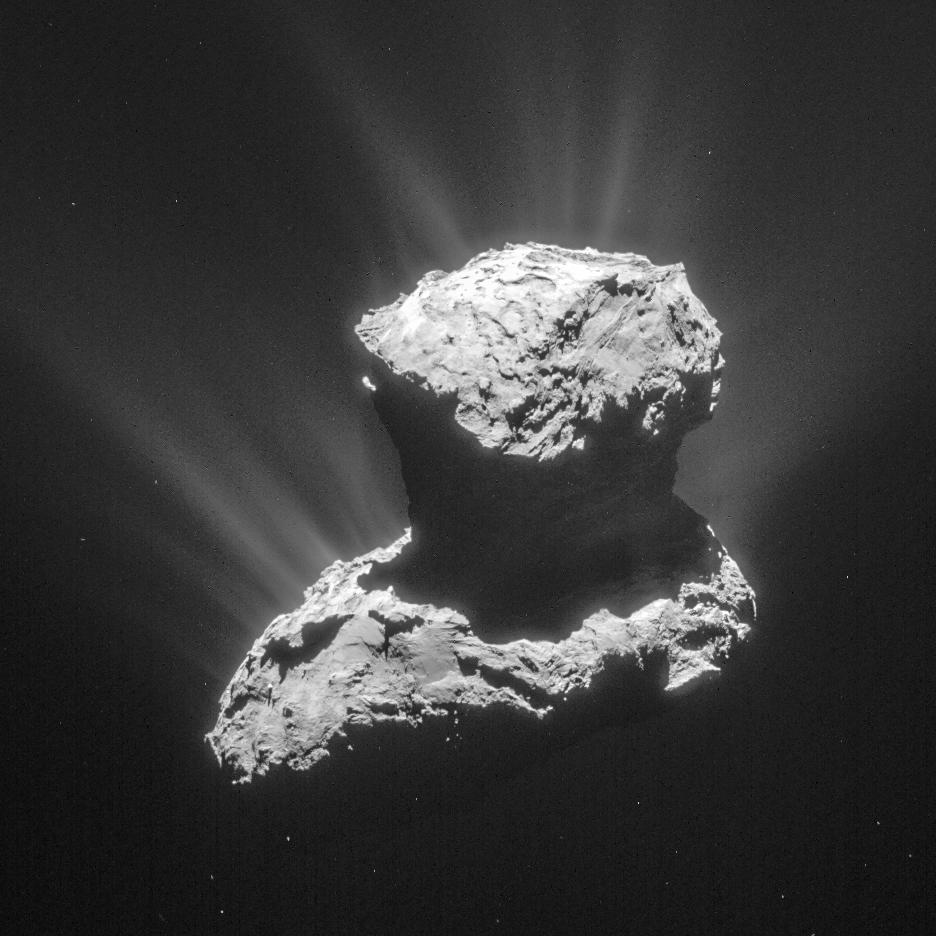
El cometa 67P/Churymov Gerasimenko, fotografiado por Rosetta / 67P/Churymov Gerasimenko, photographed by Rosetta


viernes, 23 de septiembre de 2016

Premios Ig Nobel 2016 / Ig Nobel Prizes 2016

Esta semana se ha dado a conocer a los próximos del Premio Ig Nobel de este año. Los Ig Nobel o "Antinobel", a diferencia de los Razzie o "Antioscar" en el cine, donde se premia a la peor película del año; premian a las investigaciones científicas y sociales más absurdas y con una menor aplicación en un futuro. En total, se premian diez categorías, a la cual más absurda, así que veamos qué y quiénes han sido premiados, y echémonos unas risas.

- Reproducción: al estudio de la vida sexual de las ratas al llevar pantalones vaqueros. Lógicamente esta se reduce.

- Biología: por la adaptación de dos biólogos ingleses a la vida de los tejones, nutrias, ciervos o pájaros, viviendo en plena naturaleza y desarrollando prótesis para imitarlos.

- Economía: por el estudio de cómo percibir cualidades humanas, relacionadas con el márketing, en las rocas. Se llegó a decir que una roca tenía un aspecto joven y femenino.

- Física: al descubrimiento de que los caballos blancos sufren menos picaduras de tábanos que cualquier otro caballo de otro color, debido a la polaridad de la luz.

- Química: a la empresa Volkswagen, por solucionar el problema del error cometido a propósito por el cual se medían menos emisiones de gases contaminantes de las que realmente había. Viva la ironía.

- Medicina: por el descubrimiento de que, si te pica el lado izquierdo del cuerpo, puedes verte en un espejo y rascarte el lado derecho. Nadie lo había pensado hasta ahora, NADIE. Hemos llegado a la Luna, pero nunca hemos hecho esto.

- Psicología: al estudio de la frecuencia con la que mienten las personas. Los adolescentes son los que más mienten, mientras que los adultos mienten unas dos veces al día, de media, teniendo en cuenta que los propios sujetos con los que se realizó el experimento también han podido estar mintiendo en el transcurso del experimento.

- Paz: al estudio de cómo las palabras vacías, pero que están de moda, pueden llegar a influenciar a toda la sociedad, especialmente en las personas menos inteligentes.

- Literatura: a un autor sueco, por escribir sobre el placer de recoger moscas muertas.

- Percepción: (sí, suena raro, pero esta categoría existe) por un experimento que demuestra que los objetos se ven desde otra perspectiva si se ven entre las piernas. ¿En serio? Totalmente en serio.

¿Cuál creéis que es el más absurdo o el más gracioso? ¿Hay algún descubrimiento útil entre las diez categorías premiadas? Dejad vuestra opinión en la sección de Comentarios.


This week, we have been announced the winners of the Ig Nobel Prize of this year. Ig Nobel Prizes, or "Antinobel", unlike Razzie Awards or "Antioscars" in the cinema, where the worst film is awarded; here the most nonsensical and useless researches in the scientific and social world are awarded. Ten categories are awarded, all of them very absurd, so let's see who and what has been awarded, and let's have some fun.

- Reproduction: for the study of sexual life of rats when wearing jeans. Obviously, it is decreased.

- Biology: for the adaptation of two English biologists to the life of badgers, otters, deers or birds, by living in the countryside and making prosthesis to imitate them.

- Economy: for the study of the techniques to detect human qualities, related to marketing, in rocks. It was even said that a rock had a young and female aspect.

- Physics: to the discovery of how white horses suffer from less gadfly stings that any other horse of other color, due to the polarity of light.

- Chemistry: to the Volkswagen company, for solving the problem of the intentional error in the operating system of their cars which measured lower concentrations of dangerous gases that there were in fact. Ironic.

- Medicine: for discovering that, if you need to scratch your left half of your body, you can see yourself in a mirror and start scratching your right half. Nobody had thought this until now, NOBODY. We have arrived to the Moon, but we have never thought about this.

- Psychology: for studying the frequency with which people tend to lie. Teenagers are the ones who lie most often, while adults tend to lie twice a day, on average, taking into account that the subjects asked in the experiment could have also been lying during the experiment.

- Peace: for the study of how empty, but fancy words can influence the whole society, specially the least intelligent people.

- Literature: to a Swedish author, for writing about the pleasure of collecting dead flies

- Perception: (yes, it sounds very strange, but this category exists) for a experiment that proves that objects seen from between the legs have other perspetive. Seriously? Seriously.

Which is the weirdest or funniest discovery? Do you think there is any useful discovery among the ten mentioned? Leave your opinions in the Comments Section.


Para más información / For more information: http://www.abc.es/ciencia/abci-premios-nobel-2016-hombre-vivia-como-cabras-entre-investigaciones-mas-absurdas-201609230933_noticia.html

lunes, 19 de septiembre de 2016

Teleportación cuántica en redes de fibra óptica / Quantum teleportation in optic fiber networks

Investigadores chinos y canadienses, de manera independiente, han conseguido teleportar fotones en las redes de fibra óptica en las ciudades de Hefei (China) y Calgary (Canadá), demostrando así que no es una idea descabellada la teleportación de partículas y la información que lleven consigo para así obtener formas más seguras y rápidas de telecomunicación.

La teleportación cuántica es distinto a la teletransportación, donde un objeto pasaría de estar en un lugar a inmediatamente localizarse en otro lugar totalmente distinto, algo que todavía no se ha conseguido, ni se cree que se vaya a conseguir en un futuro. La teleportación cuántica consiste en la transferencia del estado cuántico de una partícula a una localización bastante alejada, por lo que, en todo caso, no se teletransportaría materia, pero sí información, siendo esta una de las bases de la computación cuántica. Hasta ahora, todos los casos de teleportación se han dado en el orden de magnitud de decenas de kilómetros, por lo que podría ser un remedio útil para mejorar las telecomunicaciones en el ámbito metropolitano. Para teleportar información mucho más lejos se necesita una tecnología de la que, por ahora, carecemos, por lo que tardará un tiempo en hacerse realidad.

Para ampliar la distancia de teleportación, el equipo chino, de la Universidad de Ciencia y Tecnología de China, utilizó fotones con la longitud de onda de las telecomunicaciones actuales en la redes de fibra óptica para así minimizar la pérdida de información, mientras que el equipo canadiense, de la Universidad de Calgary, utilizó fotones a una longitud de onda de 795 nm, para que la teleportación fuese más rápida, unos 17 fotones por minuto, pero obteniendo un mayor error.

Estos experimentos servirán como introducción a la teleportación cuántica no solo en redes metropolitanas, sino en otras tecnologías, como los ordenadores cuánticos, lo que puede dar lugar a un antes y un después en las formas de transmisión de información. Por ahora, el récord de distancia en la teleportación de información se sitúa más allá de los 100 km.


Chinese and Canadian researchers, independently, have managed to teleport photons in the optic fiber networks in the cities of Hefei (China) and Calgary (Canada), showing that is not a bad idea to teleport particles and the information they bring in order to obtain safer and faster ways of telecommunication.

Quantum teleportation is totally different to teletransportation, where an object changes its location instantaneously in time, something which has not been managed to be done and which is unlikely that ever happens. Quantum teleportation transfers the quantum state of a particle to a quite far away location, so it would not be a teletransportation of matter, but of information, being a basis of quantum computation. Until now, all the cases of quantum teleportation have happened in the order of magnitude of tenths of kilometres, so it could be a useful way to improve metropolitan communications. To teleport information much further we need a much more advanced technology than the one we have now, so we will have to wait some years until it comes true.

In order to increase the teleportation distance, the Chinese team, from the Science and Technology University of China, used photons with the typical wavelength of current telecommunications in the optic fiber networks in order to minimize the lose of information. Meanwhile, the Canadian team, from Calgary University, used photons at a wavelength of 795 nm, in order that teleportation was faster, at a rate about 17 photons per minute, but obtaining a higher error.

These experiments will be used as introduction to quantum teleportation not only in metroploitan networks, but also in other technologies, as in quantum computers, what can create a before and later in the ways of transmission of information. By now, the record of the longest distance covered by quantum teleportation is over 100 km.

Para más información / For more information: http://www.abc.es/ciencia/abci-logran-teletransportar-particulas-traves-ciudades-201609191739_noticia.html
https://es.wikipedia.org/wiki/Teleportaci%C3%B3n_cu%C3%A1ntica
http://www.abc.es/ciencia/20150922/abci-teleportacion-cuantica-record-201509221736.html


Os dejo vídeos sobre la teleportación cuántica, en español e inglés / I leave you videos about quantum teleportation, in Spanish and English

Vídeo en español

Video in English

Velas fotónicas: el futuro de los viajes interestelares / Photonic sails: the future of interstelar voyages

Tras publicar el especial sobre Proxima B (ver http://andres96cmc.blogspot.com.es/2016/09/especial-las-claves-de-proxima-b.html), nos surgió interés en ver cómo los científicos tienen pensado enviar una sonda al sistema planetario de Proxima centauri. La clave es la Navegación Fotónica.
La Navegación Fotónica se basa en el uso de velas fotónicas como medio de impulso de una nave espacial. Estas velas fotónicas funcionan de tal modo que son impulsadas por láseres desde la Tierra, lo que implica que no llevan motores, aligerando así su estructura para alcanzar mayores velocidades. Todo el peso de la nave se concentraría en las propias velas. Al carecer de motor, estas naves pueden tener un tamaño bastante reducido, como el de una servilleta.

El funcionamiento de estas naves no es tan complejo. Las velas que impulsan a la nave están formadas por material reflectante que recibe la luz de los láseres de la Tierra, aunque también se puede impulsar por medio de otras radiaciones, como las microondas o las ondas generadas por el propio Sol. Estas radiaciones impulsan la nave, así de simple. En un principio, una nave impulsada por velas solares tarda bastante en alcanzar altas velocidades, con una aceleración actual de 1 mm/s2, o sea, su velocidad aumenta un 1mm/s cada segundo, siendo a primera vista una opción totalmente descartada a favor de la tecnología actual. Sin embargo, como el empuje que reciben es constante y apenas tienen masa, al carecer de motor propio y combustible, pasado un tiempo pueden alcanzar velocidades bastante altas, estimándose que las naves impulsadas por velas fotónicas más avanzadas que se han fabricado, pasado un tiempo, podrían alcanzar velocidades de 1000 km/s, llegando en cuestión de días a Marte. Actualmente, este tipo de navegación no tiene nada que hacer con la navegación convencional, pero hay gente que puede decantar la balanza a favor de la navegación fotónica.

Ciertos magnates y científicos de las más altas élites, entre ellos Stephen Hawking, han decidido unir fuerzas y crear el proyecto Starshot, cuyo principal objetivo es enviar una nave propulsada por velas fotónicas al sistema estelar formado por Alpha centauri A, Alpha centauri B y Proxima centauri. Teniendo en cuenta el constante avance de la tecnología actual, estos investigadores estiman que en unos 20 años se podrían diseñar naves capaces de alcanzar hasta una quinta parte de la velocidad de la luz (60000 km/s), con lo que solo tardarían unos 20 años en llegar a las estrellas más cercanas a nosotros, tras el Sol. El reciente descubrimiento del planeta potencialmente habitable alrededor de Proxima centauri, Proxima B podría desviar el objetivo del proyecto a mandar una flota de miles de naves impulsadas por velas fotónicas, del tamaño de la palma de nuestra mano, con distintos sensores y cámaras hacia el planeta. 

Teniendo en cuenta que se tardaría unos 20 años en diseñar unas naves que alcanzasen los 60000 km/s, otros 20 años en que estas naves llegasen a Proxima centauri y otros cuatro años en los que la información suministrada por las naves llegara a la Tierra, dado que Proxima B se encuentra a algo más de 4 años luz de nosotros, en unos 60 años, teniendo en cuenta retrasos, podríamos realizar el primer viaje interestelar.


After publishing the special news about Proxima B (see http://andres96cmc.blogspot.com.es/2016/09/especial-las-claves-de-proxima-b.html), we were interested in seeing how scientists think to send a probe to the planetary system of Proxima centauri. The key is the Photonic Navigation.

Photonic navigation is based on the use of photonic sails as a mean of propulsion for a spaceship. these photonic sails are propelled by lasers sent from the Earth, although they could also be propelled by microwaves or the radiation produced by the Sun. As they are not propelled by themselves, they do not need to have an engine, so they save all the weight of the engines an the fuel. All the weight of the spaceship would be concentrated on the sails and the size of the spaceship could be as small as a napkin.

The functioning of this spaceships is not so complex. The sails propelling the spaceship are made up of reflecting material which receives the laser rays from the Earth. Basically, the lasers propel the spaceship. Firstly, a spaceship propelled by solar sails can spend a long time in getting high speeds, with an acceleration of 1 mm/s2, this is, an increase in the speed of 1 mm/s every second, being at first sight a totally incompatible technology with the current technologies. Nevertheless, as it is always propelled by the laser rays and its weight is very reduced, it can get very high speeds after some time. The highest speed that a current probe propelled by photonic sails can get after some time has passed is of 1000 km/s, being able to arrive in just some days to Mars. Nowadays this type of navigation is not very advanced in comparison to the conventional navigational, but there are people that can help the photonic navigation be faster.

Some millionaires and scientists on the top of social status, Stephen Hawking among them are designing a project called Starshot Project, whose main objective is to launch a spaceship propelled by photonic sails to the star system made up of Alpha centauri A, Alpha centauri B and Proxima centauri. Taking into account the advance of technology nowadays, experts state that in 20 years, scientists could develop spaceships propelled by photonic sails that could reach a fifth part of the speed of light (about 60000 km/s). With this speed, the spaceships would only spend other 20 years in travelling to the closest stars to us, after the Sun. The recent discovery of a potentially livable exoplanet around Proxima centauri, Proxima b, can deviate the aim of the mission and send a group of spaceships of the size of our hand, with sensors and cameras, to the exoplanet.

If we spend 20 years in designing the spaceships, other 20 years in sending them to Proxima centauri and other 4 years until the information they send arrives to us, as Proxima B is a little bit more than 4 light years away, in 60 years, taking into account delays, we could complete the first interstelar voyage.

Para más información / For more information: https://es.wikipedia.org/wiki/Vela_solar#Velas_fot.C3.B3nicas

domingo, 18 de septiembre de 2016

ESPECIAL: Las claves de Próxima b / IMPORTANT: Proxima b keys

Este es el exoplaneta recientemente descubierto, nada más que hace unas dos semanas, por el Observatorio Europeo Austral en Chile. La gran expectación que ha generado no es para nada exagerada, dado que es un planeta con condiciones muy similares a las de la Tierra, y que tan solo está a algo más de 4 años luz de nosotros, lo cual en términos cosmológicos, es muy pero que muy poco.

Proxima b tiene el récord (con bastante diferencia) de ser el exoplaneta potencialmente habitable más cercano a la Tierra, a 4,224 años luz. Está tan cerca que incluso en un futuro lejano, contando con un avance imparable de la tecnología humana, se podría enviar una sonda que tardase menos de 50 años en llegar allí. ¿Pero cuáles son los datos que realmente hacen que Proxima b sea tan parecida a la Tierra?

- Proxima b cuenta con la condición indispensable para que este pudiera albergar vida similar a la terrestre: se encuentra en la zona habitable de su sistema planetario. No se encuentra ni muy cerca de su estrella, donde las temperaturas alcanzarían varios cientos de grados en su superficie y sería un infierno terrenal; ni muy lejos, donde las temperaturas se desplomarían incluso por debajo de los -200ºC, a muy pocos Kelvin. Simplemente se encuentra a la distancia justa de su estrella madre, Proxima Centauri, una enana roja, siendo así la segunda estrella más cercana a la Tierra tras el Sol. Se estima que se encuentra a unos 8 millones de km de ella, unas 0,05 UA.

- A pesar de que su temperatura media es relativamente baja, unos -40ºC, este planeta se encuentra anclado por marea a Proxima centauri, es decir, que siempre le muestra la misma cara, lo mismo que sucede con la Luna y la Tierra. Por lo tanto, en la cara en la que continuamente recibe radiaciones de su estrella la temperatura es bastante alta, pero en la cara en la que nunca recibe luz está a temperaturas muy bajas; de modo que en regiones que estén entre medias de las dos caras la temperatura sería más apacible, e incluso sería posible la presencia de agua líquida en la superficie, con temperaturas superiores a los 0ºC, siempre y cuando la presión de su atmósfera sea parecida a la presión atmosférica terrestre.

- Su tamaño es ligeramente superior al de la Tierra, en torno a un 10%, mientras que también es ligeramente más masivo, alrededor de un 27% más, con lo que su densidad es similar a la de la Tierra, lo que lleva a pensar que los materiales que conforman Proxima b también podrían ser parecidos. Su gravedad también podría ser ligeramente parecida.

- Al estar anclado por marea a su estrella madre, Proxima b tarda lo mismo en dar una vuelta alrededor de su estrella que en rotar sobre sí mismo, con lo que un día y un año duran allí lo mismo: algo más de 11 días terrestres.

- Su estrella madre, Proxima centauri, es una enana roja, algo mayor que el Sol, unos 4850 millones de años de edad (la edad del Sol es de unos 4600 millones de años), pero mucho más fría y pequeña que este, con una temperatura en superficie de más de 3000ºC, un radio del 14% del radio solar y una masa del 12% de la solar. Tiene también una esperanza de vida mayor que la del Sol. Como ya hemos dicho antes, es la segunda estrella más cercana a la Tierra tras el Sol, siendo descubierta en 1915 por Robert Innes. Hace unos años se descubrió que forma parte de un sistema de estrellas conocido como Alfa centauri, formado por Alfa centauri a, Alfa centauri b y Proxima centauri. Al ser una estrella más fría y pequeña, la zona de habitabilidad de su sistema planetario se localiza mucho más cerca que la del Sol.


- Otro dato que también ha causado bastante interés en el planeta, y que ya no es científico, es la propuesta de Stephen Hawking de enviar una misión allí, y que según sus cálculos, solo tardaría unas décadas en llegar. Hawking afirma que en unos 20 años se podría inventar una tecnología que aceleraría en gran medida los viajes espaciales: sondas del tamaño de una pelota de tenis propulsadas por láser. Estas sondas solo tardarían unos 20 años en llegar a Proxima b, alcanzando un 20% de la velocidad de la luz.


- El principal dato desalentador sobre la exploración del exoplaneta es la escasa tecnología de la que disponemos para llegar allí hoy en día. Por poner un ejemplo, la sonda que más se ha alejado del planeta Tierra, la Voyager 1, lanzada en 1977 y que ahora mismo se localiza más allá del Sistema Solar, tardaría más de 40000 años en llegar. Para hacernos una idea, 40000 años es lo que nos separa de tiempo con los hombres que realizaban las pinturas rupestres. Hace 40000 años, los neandertales o los mamuts existían, y no había ningún rastro de grandes civilizaciones. Es poco probable que un vehículo esté operativo durante tanto tiempo.

¿Llegará el hombre alguna vez a Proxima b? Por ahora, se ve que no, ya que ni siquiera hemos sido capaces de llegar a Marte, a pesar de tener los medios disponibles, por lo que realizar una misión imposible desde el punto de vista no solo tecnológico sino también económico es un gran riesgo a sufrir un fracaso, en un 99 seguido de muchos nueves, por ciento. La exploración de Proxima b sea seguramente un problema de las siguientes generaciones, a pesar de los grandes ánimos del señor Hawking. Por ahora, no.

¿Vosotros qué pensáis? Dejad vuestra opinión en los Comentarios.


This is the recently discovered exoplanet, some weeks ago, by the European Southern Observatory in Chile. The great expectation it has brought is not exaggerated by any term, as it is a planet with very similar conditions to the ones of the Earth, and that is only a little bit more than 4 light years away, what, in cosmologic terms, is a really short distance.

Proxima b has the record of being the closest potentially livable exoplanet, 4224 light years away. It is so close that in a far future we could send a spaceship, which, with the unstoppable advance of current technology, only spends a little bit more than 40 years to arrive there. But which are the most important data that make Proxima b so special?

- Proxima b has the essential condition for being a potentially livable planet. It is not very close to its mother star, so the temperatures there do not reach hundreds of degrees, as if it was a real hell and it is not very far away, so the temperatures are not some hundreds of degrees below zero, just few Kelvin. It is just located in the appropiate distance, where it is not too cold nor too hot, being 8 million km away (0.05 AU) from its mother star, Proxima centauri, a red dwarf that is the second closest star to the Earth, after the Sun.

- Although its average temperature is quite cold, about -40ºC, this datum is quite deceiving, because Proxima b is tidally locked to its star, this means that it is always showing the same face to Proxima centauri, so it has a very hot face, the one receiving all the radiation from the star and a very cold face, the one opposing the star. Therefore, in the line of separation of both faces, the temperature is not so low nor high, and it could be possible to obtain there water in liquid state, if the temperature is above 0ºC and the atmospheric pressure is similar to the one of the Earth's atmosphere.

- Its size is quite bigger than the one of the Earth, a 10% more, while it is a 27% more massive, so it has a very similar density to the one of the Earth, what means that the materials it contains could also be similar to the ones in the Earth. Its gravity could also be slightly similar.

- As Proxima b is tidally locked to Proxima centauri, it spends the same time in rotating itself than spinning around the star, as happens with the Earth and the Moon. A year and a day in Proxima b have the same duration. The total period is a little bit longer than 11 days.

- Its mother star, Proxima centauri, is a red dwarf, quite older than the Sun, 4.85 billion years old (the Sun is 4.6 billion years old), but much colder and smaller than the Sun, with a surface temperature of 3000ºC, a radius which is a 14% the one of the Sun and a mass that is a 12% the one of the Sun. It also has a longer life expectancy than the Sun, although it is older. As we have already said, it is the second closest star to the Earth after the Sun, being discovered in 1915 by Robert Innes. Some years ago, it was discovered that it belonged to a system of three stars, together with Alpha centauri a and Alpha centauri b. As it is much colder and smaller than the Sun, its habitability region is much closer to it than the one of the Sun.

- Other datum that has also created many interest, and which is not scientific, has been the proposal of Stephen Hawking of sending a mission there. According to his calculations, the spaceship would only spend 3 decades in getting there. Hawking states that in 20 years' time, a new technology will generate a very important revolution in the world of space travelling: probes of the size of a tennis ball propelled by lasers that could reach a 20% of the speed of light. With this speed, the probes would just arrive in 20 years to Proxima b.

- Tha main discouraging data is that nowadays we do not have the means to get there in a lifetime. For instance, the Voyager 1, the vehicle which has travelled the highest distance from the Earth ever since, being launched in 1977 and being now beyond the limits of the Solar System, would spend 40000 years in arriving to Proxima b. 40000 years is the time that separates us from the men who painted in caves, for having an idea. 40000 years ago, Neanderthals and mammoths still existed. It is very unlikely that a vehicle reamins operative for such a long time.

Will humanity arrive to Proxima b? Right now, it is impossible, as we have not even been able to go to Mars, although we have the means for going to Mars, so it is unthinkable to go to a place if we do not have the means. Designing a mission nowadays to Proxima b would be a technologic and economic failure in a 99 followed by many nines as decimal figures per cent. The exploration of Proxima b will be probably a problem for the next generations of scientists, even if Mr. Hawking has very enthusiastic ideas. For now, no.

What do you think? Leave your opinions in the Comments section. 


Os dejo vídeos informativo del exoplaneta Proxima b, en español, y otro en inglés / I leave you videos with more information about Proxima b, in Spanish and in English.

En español

In English

Para más información / For more information: https://es.wikipedia.org/wiki/Pr%C3%B3xima_Centauri_b
http://elpais.com/elpais/2016/08/31/ciencia/1472630081_159405.html
http://www.investigacionyciencia.es/blogs/tecnologia/35/posts/intuitivamente-cun-lejos-est-prxima-b-14514
https://es.wikipedia.org/wiki/Voyager_1
https://es.wikipedia.org/wiki/Acoplamiento_de_marea

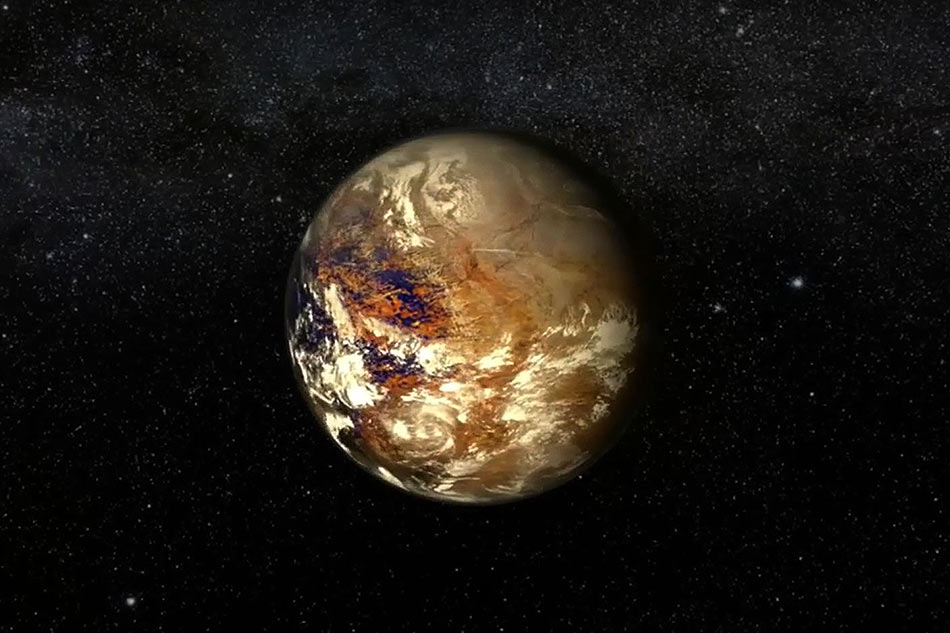
Imagen de Proxima centauri / Image of Proxima centauri: http://sa.kapamilya.com/absnews/abscbnnews/media/news-special1/lifestyle/8/25/proxima-b-082416.jpg